
Perten AM 5300 vs DICKEY-john GAC 2700: Precision, Calibration and Service Support
Choosing the Right Grain Moisture Meter for Long-Term Confidence
For grain merchants, laboratories, feed manufacturers, millers and grain storage operations, a moisture meter is far more than a piece of testing equipment.
The results produced by a moisture analyser can influence drying decisions, grain acceptance, storage conditions, quality control and ultimately the commercial value of a load. That makes accuracy, repeatability, calibration control and dependable technical support just as important as the speed of the measurement itself.
Two established instruments in this market are the Perten Aquamatic AM 5300 and the DICKEY-john GAC 2700.
Both are designed to provide rapid measurement of grain moisture and test weight, using advanced high-frequency technology and automated sample handling. However, there are some important differences in their approach to instrument design, calibration and ongoing support.
Perten AM 5300: Designed Around Repeatability and Operational Control
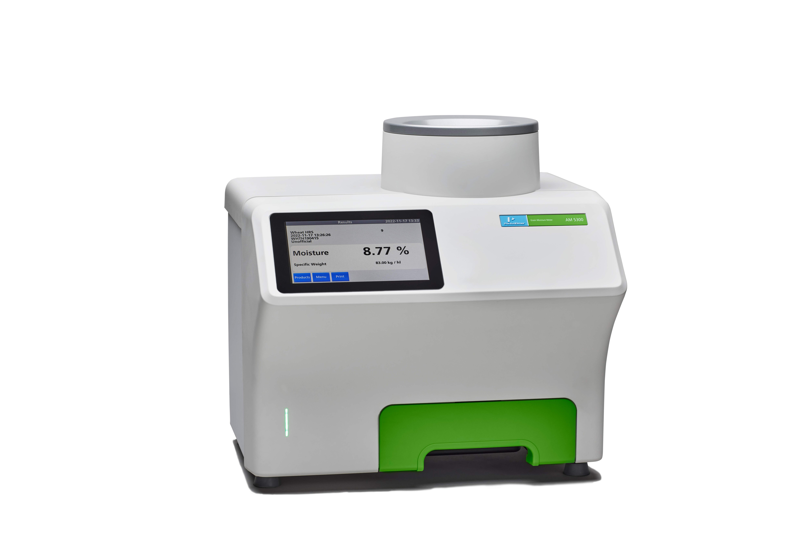
The Perten AM 5300 is the third-generation development of Perten established grain moisture measurement platform.
The instrument uses 150 MHz technology together with the Unified Grain Moisture Algorithm (UGMA). It is designed to measure moisture, test weight/hectolitre weight and temperature across grains, oilseeds, pulses, beans, lentils and other commodities. Perten states that results can be produced in approximately six seconds, while other published specifications describe analysis in around ten seconds depending on configuration and application.
One of the most important aspects of the AM 5300 is that the measurement system has been engineered to control the physical conditions under which the sample is measured.
The instrument incorporates a single-piece cast measurement cell, helping maintain consistent volume and density measurement. The RF electronics are integrated directly into the measurement cell, reducing reliance on cabling and helping avoid impedance-matching issues associated with connector degradation over time.
This matters because repeatability is not simply a function of the software calibration. The mechanical condition of the measurement cell, sample presentation, temperature measurement and sample flow can all affect the final result.
Temperature control is particularly important
Grain does not always arrive at laboratory or intake temperature.
Samples may be freshly harvested, warm from a dryer or extremely cold after storage. The AM 5300 uses a large-area temperature sensing arrangement designed to respond rapidly to differences between grain and ambient temperature. Published specifications give a sample temperature range extending down to approximately -18°C under specified moisture conditions.
That gives the operator an important advantage when dealing with real-world grain rather than carefully conditioned laboratory samples.
Calibration: Where Confidence in the Result Begins
Calibration is arguably one of the most important considerations when comparing moisture meters.
The AM 5300 is supplied with calibration sets, with the appropriate calibration set activated according to the region selected during installation. Perten also offers custom calibration development where a particular application requires it.
This gives operators a structured approach to calibration management rather than relying on manual adjustment of every instrument.
For businesses handling multiple commodities or operating across different regions, calibration control becomes particularly important. The objective is not simply to obtain a number from the meter, but to ensure that the number is based on the appropriate calibration for the commodity and operating environment.
The USDA's official moisture-equipment resources also highlight the importance of official calibration procedures and check testing for moisture meters used within regulated grain inspection applications.
Built for Continuous Commercial Use
The AM 5300 has also been designed with durability and reduced downtime in mind.
Perten specifies a robust construction incorporating metal sheeting and polymer components, while the instrument uses a single high-quality motor rather than a more complicated multiple-motor arrangement. Its automatic transport lock is designed to protect the instrument during movement.
Practical design details also help reduce contamination and maintain measurement consistency.
The gravity-driven sample-cell door is designed to help prevent material build-up, while the sample strike-off and internal guides are intended to control grain flow and reduce debris accumulating inside the instrument.
For a busy grain intake, these seemingly small details can have a significant effect on maintenance requirements and long-term consistency.
Data Integration and Connectivity
Modern grain testing is increasingly connected to the wider quality-control process.
The AM 5300 provides USB and Ethernet connectivity and can be configured to communicate with external systems. Perten specifically highlights compatibility with existing scale software and LIMS systems, with an output format capable of mimicking GAC systems where required.
That can make the AM 5300 particularly attractive when replacing an existing GAC-based installation without wanting to redesign the wider data or weighing infrastructure.
The instrument can also automatically begin the analysis process after the operator has selected the commodity and loaded the sample, reducing unnecessary touchscreen interaction and helping simplify the workflow.
DICKEY-john GAC 2700
The DICKEY-john GAC 2700 is another highly established platform for grain moisture analysis.
The GAC 2700 range includes different configurations, including the GAC 2700-AGRI, GAC 2700-UGMA and GAC 2700-INTL. Consequently, the exact capabilities and calibration arrangements depend on the model being compared.
The GAC 2700 uses 149 MHz technology, with the UGMA version specifically designed to provide improved consistency across grain types, grain densities and temperatures. DICKEY-john states that the GAC 2700-UGMA can measure frozen and hot grain up to 113°F and is equipped with NTEP calibrations for grain types covered by the instrument.
The GAC 2700-AGRI is aimed specifically at agricultural users and provides measurement of grain moisture and test weight, together with temperature compensation for hot and frozen grain. It can also store thousands of sample results for later export or printing.
Calibration Management on the GAC 2700
Calibration management is one of the strengths of the GAC 2700 platform.
The instrument allows users to view installed calibrations and, depending on the model and calibration type, add, modify or delete calibration files. DICKEY-john also provides calibration downloads and offers custom calibration services.
The GAC 2700-INTL takes this further by distinguishing between official and unofficial calibrations.
Official calibrations are controlled and cannot be modified by users, distributors or authorised service centres, while unofficial calibrations can be managed by users within the capabilities of the instrument.
This distinction can be particularly important in environments where traceability and regulatory compliance are central to the testing process.
Service and Support: A Key Advantage of the Perten AM5300
When comparing moisture meters, the decision should go beyond technical specifications and consider the service and support available throughout the life of the instrument.
This is a key strength of the Perten AM5300 through Calibre. Calibre provides dedicated UK-based service and technical support, helping customers keep their instrument operating accurately and reliably, particularly when it matters most during busy harvest and intake periods.
Support extends beyond simply supplying the instrument. Calibre can provide technical assistance, calibration support, authorised service parts, troubleshooting guidance and repair expertise, giving operators access to knowledgeable support when issues arise. This helps minimise downtime and provides reassurance that the instrument can be maintained and supported throughout its working life.
Quick access to technical expertise, calibration support, parts, and repair facilities can reduce downtime and keep you confident in your moisture results.
Ultimately, the value of a moisture meter is not just in the instrument itself, but in the service, expertise and ongoing support behind it. With the Perten AM5300, Calibre provides that additional layer of support as part of the overall package.
AM 5300 vs GAC 2700: Key Differences
| Area | Perten AM 5300 | DICKEY-john GAC 2700 |
|---|---|---|
| Measurement technology | 150 MHz + UGMA | 149 MHz; UGMA on applicable models |
| Main measurements | Moisture, test weight/hectolitre weight, temperature | Moisture, test weight, temperature |
| Typical analysis speed | Approximately 6–10 seconds depending on configuration | Rapid analysis; model/application dependent |
| Grain temperature capability | Designed for hot and cold grain | Designed for hot and cold grain |
| Calibration management | Regional calibration sets included; custom calibration available | Extensive calibration library; model-dependent editing and installation |
| Official calibration control | Dependent on applicable regulatory/model configuration | Strong distinction between official and unofficial calibrations |
| Data connectivity | USB and Ethernet | Multiple USB connections; model-dependent connectivity |
| LIMS/system integration | Designed for external system integration | Designed for data export and system integration |
| Sample handling | Automated loading/unloading | Automated sample handling |
| User interface | 7-inch colour touchscreen | Large colour touchscreen |
| Maintenance philosophy | Mechanical design aimed at reducing contamination and wear | Extensive diagnostics and established service infrastructure |
| Service support | Perten/PerkinElmer support network | DICKEY-john technical support and authorised service network |
| Custom calibration | Available on request | Available, subject to application |
Specifications and capabilities can vary between regional and model variants, so the exact configuration should always be confirmed before purchase.
Which Instrument Is Best?
There is no universal answer because the right choice depends on what the instrument is expected to do.
If the priority is high repeatability, robust sample handling, straightforward operation and integration into an existing grain-testing or LIMS environment, the Perten AM 5300 is a particularly compelling option.
Its 150 MHz measurement technology, integrated measurement-cell design, temperature sensing, and automated workflow are designed to produce consistent measurements while minimising operator involvement.
The AM 5300 can also be an attractive replacement for existing GAC installations because its configurable data output can emulate GAC system output, potentially reducing disruption when integrating it into existing scale or laboratory software.
The GAC 2700, meanwhile, has a slight advantage in its established global DICKEY-john ecosystem. Its calibration-management system, model-specific official calibration controls, and extensive support documentation make it a good fit for operations already standardised around DICKEY-john equipment.
The Importance of Service and Support
For a professional moisture meter, the purchase price is only one part of the investment.
The real question should be:
What happens when the instrument needs calibration, verification, repair or technical assistance during the busiest part of the year?
This is where a strong supplier and service partner can make a substantial difference.
A good service package should provide:
Calibration verification and advice. Access to approved calibration files. Routine servicing and preventative maintenance. Fast diagnosis of instrument faults. Repair and replacement support. Advice on commodity-specific calibration. Assistance with data integration. Operator training. Support during harvest and peak intake periods.
The GAC 2700 benefits from a clearly documented manufacturer support structure, while the AM 5300 benefits from Perten's long experience in whole-grain analysis and the wider PerkinElmer organisation. Both manufacturers therefore offer substantially more than simply selling a moisture meter.
AM 5300 or GAC 2700? A Practical Conclusion
For businesses considering a new grain moisture meter, the decision should not be based solely on which instrument produces the fastest result.
Both the Perten AM 5300 and DICKEY-john GAC 2700 are sophisticated grain analysers designed to provide rapid moisture and test-weight measurements.
The more important consideration is the complete measurement system:
instrument + calibration + verification + service + technical support + data integration.
The Perten AM 5300 stands out for its 150 MHz technology, robust measurement-cell construction, automated operation, temperature measurement and integration capabilities. Its design places a strong emphasis on repeatability, reliability and reducing operator intervention.
The DICKEY-john GAC 2700 is a strong alternative, particularly for organisations already operating within the DICKEY-john ecosystem or requiring extensive calibration management and established technical-support infrastructure.
NEED FURTHER GUIDANCE?
For bespoke advice or to request a demonstration, contact Calibre Control’s dairy specialist team today.