
Perten ShakeMatic Sample Mixer

Perten ShakeMatic Sample Mixer
The Perten ShakeMatic is an automatic sample mixer for the Falling Number method. The mixing takes 3 seconds which can speed up the Falling Number testing process, whilst improving mixing consistency and repeatability. By using the ShakeMatic for sample preparation, you are reducing any differences in mixing and shaking technique within and between laboratories - therefore improving the Falling Number results consistency.
What is it used for?
Sample preparation
Used in Grain intake labs alongside Perten Falling Number
Features and Benefits:
Fast mixing in just 3 seconds
Reproducible and consistent mixing
Removes any differences in hand shaking method within and across laboratories
Double mixing to reduce testing time - Perfect for the double falling number tests (Falling Number 1000)
Related Products
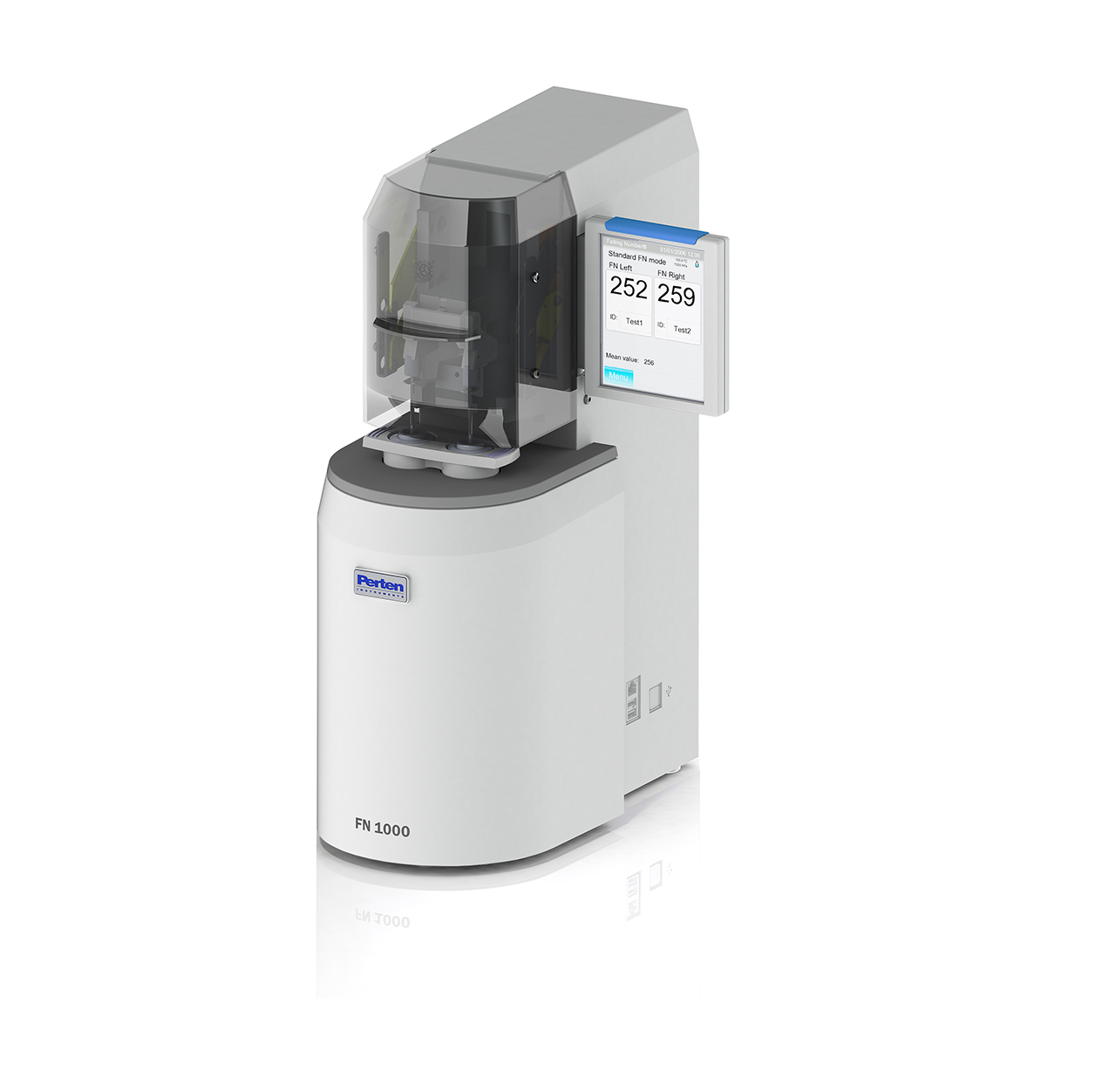
Perten Falling Number 1000 uses the Hagberg method to measure alpha-amylase (AA) enzyme activity in flour, seeds and grain.
Measuring alpha-amylase activity is essential for ensuring the final product quality of various food staples, including bread and pasta.
Using this instrument, you can:
Detect sprout damage
Optimise flour enzyme activity
Guarantee the quality of grain for trading
Verify total enzymic activity in flours with fungal enzyme supplements.
Use Perten Falling Number 1000 to test for:
Alpha-amylase
On these products:
Cereal grain
Flour
Seeds
Barley.
Why Choose Perten Falling Number 1000?
It’s the world leading method for testing Alpha Amylase
It’s user-friendly, with auto-start, automated water level control and sensing for temperature and atmospheric pressure
It’s safe to use, with an insulated water bath and safe-to-touch cooling lid
It optimises analysis time by allowing you to set it to a target FN value, at which point it will stop automatically
It’s equipped to test flours with the addition of fungal alpha-amylase
It makes automatic altitude corrections
It has an easy touch-screen operation and is equipped with multiple ports for connectivity.
How Does it Work?
The falling number (FN) test transfers a flour sample into a starch-like substance by combining it with hot water. A falling paddle tests the thickness of the substance over a specified time, measured in seconds.
FN is the measurement of the time it takes to mix the substance, plus the time it takes the paddle to fall through the mixture’s gelatinised starch.
Perten Falling Number 1000 streamlines the falling number (FN) process.
FN tests for:
Enzyme activity in wheat flour
Sprout damage to wheat kernels
Water-binding capacity and water absorption
Issues related to dough-handling
Flour specifications.
Benefits of Testing using Perten Falling Number 1000
Measuring Alpha Amylase activity in baking ingredients is essential for optimising baking processes and results.
The right amount of Alpha Amylase activity enables bakers to achieve high volumes of bread with an ideal combination of firm and soft textures.
When Alpha Amylase is too low, the breadcrumb will be drier. When Alpha Amylase is too high, the resulting dough will be stickier. In both cases, you get less volume from your bake.
FN manages risk in baking, helping you get a consistency of quality from your bake, and producing bakes with specific desired qualities. You can use Perten FN 1000 to set specific FN targets and register sample IDs.
The instrument can provide mean moisture calculations, moisture and altitude-corrected results, and calculate blends and malt addition.
It provides a uniform, globally recognised standard of testing for grain farmers, intake and processors.
For more information, please contact Calibre Control.
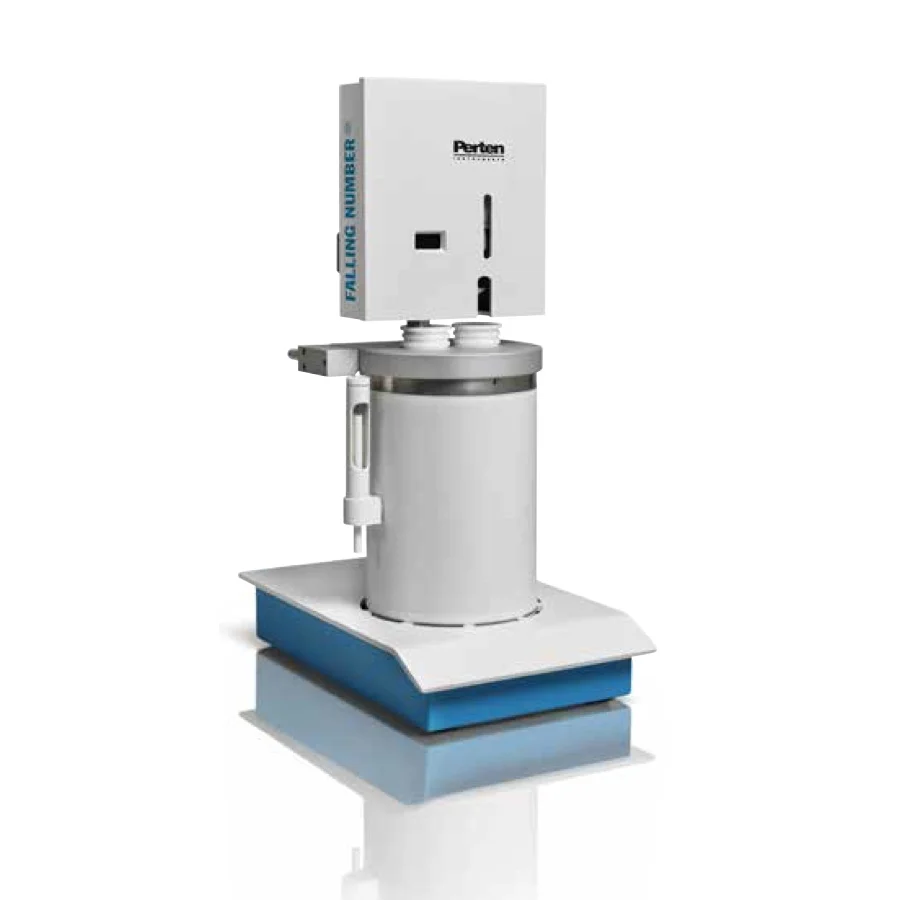
If you grow, trade, store or process cereals, the Perten Falling Number 1310 is essential for protecting grain quality and market value.
As the gold standard for falling number testing equipment, it accurately measures alpha-amylase enzyme activity in grain and flour – a critical factor in determining baking, processing and trading suitability.
With one straightforward test, this robust instrument helps you optimise flour enzyme activity, detect sprout damage in wheat and other cereals, and ensure your grain meets global quality standards.
As UK food quality specialists, Calibre Control understands how the right testing transforms operations, making this invaluable for farmers, grain handlers, millers and food producers.
Which foods does a Falling Number (FN) machine test?
A falling number machine is designed to rapidly assess a variety of cereals and grains, helping you make the right quality decisions.
Wheat
Testing helps flour millers and bakers catch sprout damage in wheat early, ensuring their flour consistently produces high-quality bread with good rise and texture.
Rye
Regular testing of rye flours means bakers can trust their dough to perform well and their finished loaves will have the right structure.
Barley
For maltsters and breweries, falling number results reveal enzyme levels that affect fermentability, beer clarity and overall batch yield.
Durum
Crucial for pasta and semolina producers, as controlling enzyme activity is key to achieving firm, non-sticky pasta.
Malted Grains
In malting and distilling, keeping track of falling numbers helps producers maintain optimal conversion rates and flavour development, plus avoid expensive production problems caused by unwanted sprout damage.
What does it measure?
The Perten FN 1310 measures ‘falling number’, an internationally recognised value expressing alpha-amylase enzyme activity.
Often referred to as the Hagberg Method, it works by recording the time, in seconds, for a weighted plunger to fall through a heated slurry of flour (or ground grain) and water.
Low numbers signal high enzyme activity often caused by sprout damage, while high numbers demonstrate sound, undamaged grain.
Why test for alpha-amylase?
Testing for alpha-amylase is essential because it gives you early warning against sprout damage.
A sudden spike in enzyme activity can quickly ruin the quality of your grain, leading to issues such as sticky dough, loaves that won’t rise and pasta that falls apart in the pan.
By regularly checking your grains and flour with a falling number machine like the FN 1310, you can spot these issues before they disrupt your business.
This reduces your risk of having shipments downgraded or rejected, leads to fewer complaints about quality, and gives you confidence that your product will live up to expectations.
Technical specifications of the Perten FN 1310
The Perten FN 1310 is built for accuracy, reliability and straightforward daily use.
Here’s a closer look at the technical details that make it a trusted choice for the grain and food industries.
· Power requirements: 115 or 230 V, 50 or 60 Hz (specify on order)
· Power consumption: Heat-up 1100 VA, running 500 VA
· Dimensions (H x D x W): 525 x 370 x 223 mm
· Net weight: 8kg
· Cooling water consumption: 25 l/h
· Parameters: Alpha-amylase activity/starch properties
· Products: Flour and meal of wheat, durum, rye, barley, other grains and malted cereals
· Calibration: No external calibration required.
· Official approvals: International standards and recommendations such as the AACC International Method 56-81.03 and ICC Standard No. 107/1, ISO 3093.
Benefits of the Perten FN 1310
This piece of falling number testing equipment makes life easier across the grain industry.
Here’s what makes it a genuinely valuable addition to any operation.
· Trusted everywhere: This is the worldwide industry standard for detecting sprout damage in wheat and other grains.
· No fuss for operators: You don’t need a lab expert to use it. Anyone on your team can get reliable results after a quick introduction.
· Consistent every time: Once it’s set up, you can trust the FN 1310 to deliver the same accurate results, test after test.
· Keeps costs low: Built to last with minimal moving parts, this machine rarely needs attention and uses very few consumables.
· Forget frequent calibration: The system is based on simple timing, so there’s no need to constantly calibrate or worry about drifting results.
· Proof of quality: Your customers get clear, reliable data to show your grain is up to standard, helping you achieve better prices and avoid disputes.
· Saves precious time: It works fast with a single analysis stirrer, so you aren’t left hanging around waiting for each result before moving on.
What is the price of a Falling Number machine?
The falling number machine price varies according to the specifications required.
Contact Calibre Control for a bespoke quote matched to your precise needs, including accessories.
How Calibre Control can assist
As leading UK food safety and quality control experts, Calibre Control offers trusted guidance to help you choose the right falling number testing equipment for your business’s needs.
Protect your products, reputation and market value.
Contact Calibre Control today to enquire about the Perten Falling Number 1310 or to order your machine.
FAQs
What does the falling number method test?
It measures alpha-amylase enzyme activity, key for identifying sprout damage and ensuring flour quality.
Can I test whole grain samples?
For best results, grind before testing.
What is sprout damage?
Sprout damage occurs when grains germinate before harvest, elevating enzyme levels and harming end-use quality.
Is it difficult to operate a falling number machine?
No. The FN 1310 is designed to be simple for routine laboratory use with automated processes and intuitive controls.
Does it require frequent calibration?
The FN 1310 is factory calibrated and requires no further calibration.
What’s the difference between FN 1310 and other types of falling number machine?
The FN 1310 stands out for automation, speed, minimal maintenance and official method approval, making it the number one choice for rigorous laboratory and industry needs.

To prepare grains for testing, milling and grinding are essential processes.
Perten Labmill 3100 is a hammer mill designed to ensure excellent grain sample preparation.
The Labmill 1000 is built for resilience, solidly constructed from metal and capable of grinding different sample types.
Use Labmill 3100 for:
Grain sample preparation
Why Choose Labmill 3100?
Sample preparation with Labmill 3100 reduces sampling errors
It’s designed to be long-lasting, with a robust build
It operates with low noise levels
Its special cyclone design minimises the need for cleaning between samples
It fulfils falling number (FN) sample preparation requirements.
How Does It Work?
The hammer mill grinds sample material using a high-speed rotating hammer to crush it.
Around the outside of the instrument, there is a sieve, through which the crushed particles leave the grinding chamber. You can select different sieve sizes to vary the distribution of sample sizes.
The hammer mill ensures you get a fine, homogenous sample.
It can grind up to 300g of samples in one go. This weight of prepared sample material meets the amount required to conduct the falling number test.
Reasons for Using Labmill 3100
You can achieve the right particle size for your specific testing method while cutting down on time and energy in sample preparation.
The homogeneity of the sample influences the quality of analysis results, and the Labmill 3100 will make sure you get homogenised particles for testing and measuring purposes.
Its robust design ensures a lifetime of sample preparation combined with reliable repeatability in achieving perfect sample sizes.
Perten Labmill 3100 is suitable for grinding grains and oilseeds in preparation for:
Falling number
NIR analysis
Gluten testing
and more.
For more information, please contact Calibre Control.